

Finding the Edge
From modifying gaming controllers to advancing mission-critical AI, Stephan has built his career on finding an edge through innovation, determination and a drive to deliver results.


Before he was AI engineering senior manager at Lockheed Martin, Stephan was a teenager in Fort Worth, Texas, modifying Xbox controllers to get an advantage in Call of Duty. The instinct that drove him then is the same one driving him now.
In the Xbox 360 era, being great at Call of Duty was only part of the equation. Players also looked for any tool that could make them faster, sharper or tougher to beat. Stephan modified his controller.
"That,” he says, “got me excited about electrical engineering."
Modeling the Mission
Stephan, AI engineering senior manager, is a second-generation Lockheed Martin employee. His father joined General Dynamics, stayed through the Lockheed Martin acquisition, and spent his entire career with the company, finishing as a senior fellow in propulsion and retiring in fall of 2026.
But Stephan didn’t immediately follow in his father’s footsteps.
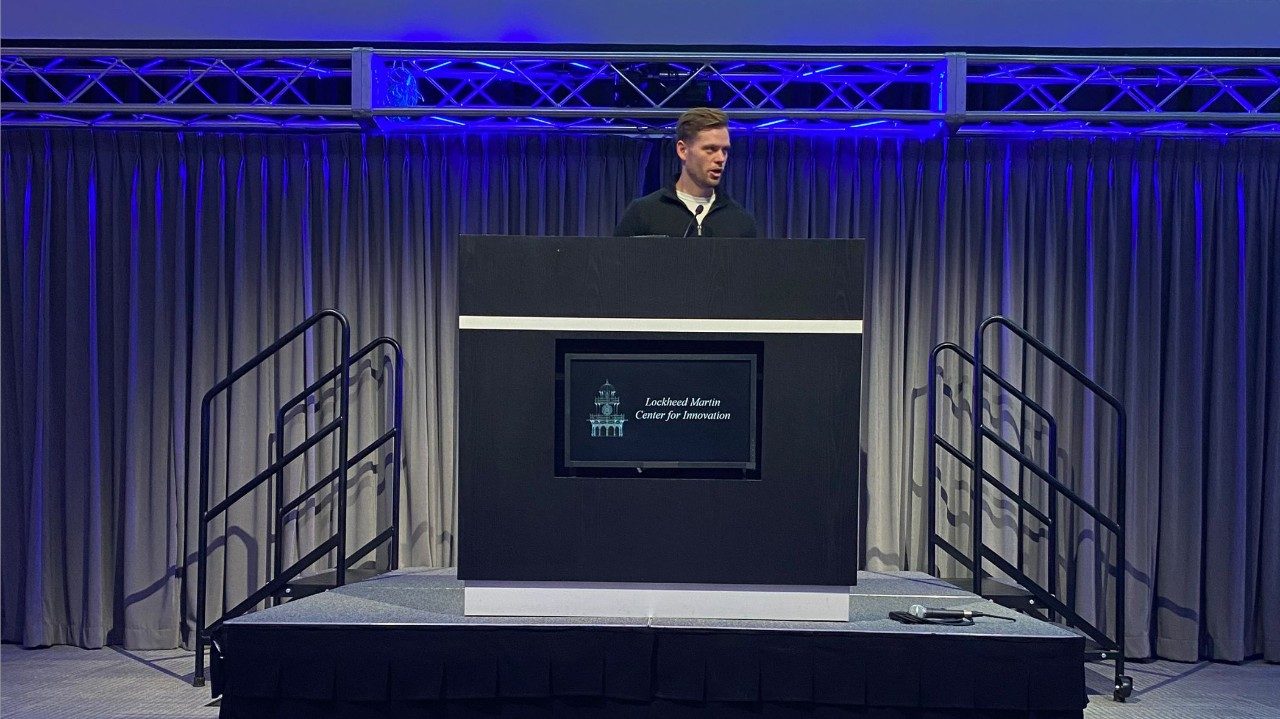
While studying electrical engineering at Oklahoma State University, Stephan took an internship at Boeing's Oklahoma City operation. "A lot of people ask why I started at Boeing," he says. "The simple answer is they offered me my first internship."
After graduation, he worked his way through a rotational engineering program, moving across Boeing business areas before landing in operations analysis, a field he describes in terms that connect for anyone who grew up with a game console.
"Think of any major sports game," he says, "and then doing that same type of modeling and simulation for military technologies. You’re asking: ‘If I add this capability, does it make the platform more effective?’” The work spans everything from a single platform’s signature to campaign-level outcomes across hundreds of assets.
It's a field built around testing what works and what doesn’t, and that suited him.
When Stephan moved back to Fort Worth to start a family, he joined Lockheed Martin's operations analysis group. His work eventually brought him into contact with early autonomy and AI programs. One analysis compared the effectiveness of early autonomous aircraft, precursors to what the Air Force now calls Collaborative Combat Aircraft. That work put him in front of a director named Justin. Not long after, Justin became the first vice president of the Lockheed Martin AI Center — now known as the LAIC — and opened a role for a technical assistant.
Stephan wasn't actively looking. But when the posting landed in his inbox, and he saw it reported to Justin, he applied.
Getting Out What You Put In
The technical assistant role puts relatively junior employees in direct proximity to senior leadership. "You get out of it what you put in," Stephan says, and he was deliberate about it. Whenever Justin fielded a question, Stephan would predict the answer, then compare Justin’s response to his own. Sometimes he was close. Sometimes, he says, he had no idea what Justin was going to say. He paid attention either way.
A room full of people several levels above you is either an opportunity or something you endure. "It's easy to be passive," he says. “But you gain so much more by speaking up.”
Making It Real
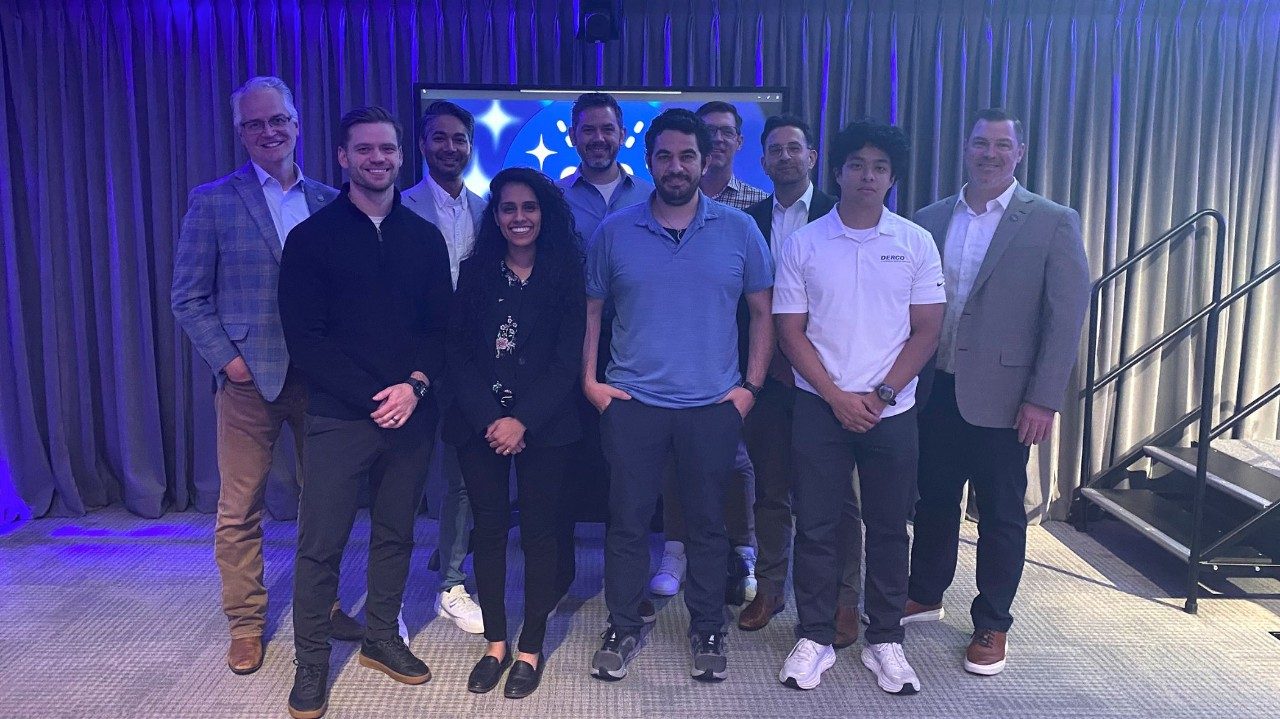
About a year in, Stephan was offered a manager position back in operations analysis. He took it. Then, two and a half years later, the LAIC called again, this time with a harder ask, to lead a strategic corporate investment that had been funded for a few years, but hadn’t found its footing. The team needed clearer roles, and the technically ambitious work needed a stronger path to measurable impact.
Stephan moved quickly. Within a month, he had reorganized the program, now called STAR.OS™, around distinct product lines, each mapped to a concrete transition opportunity.
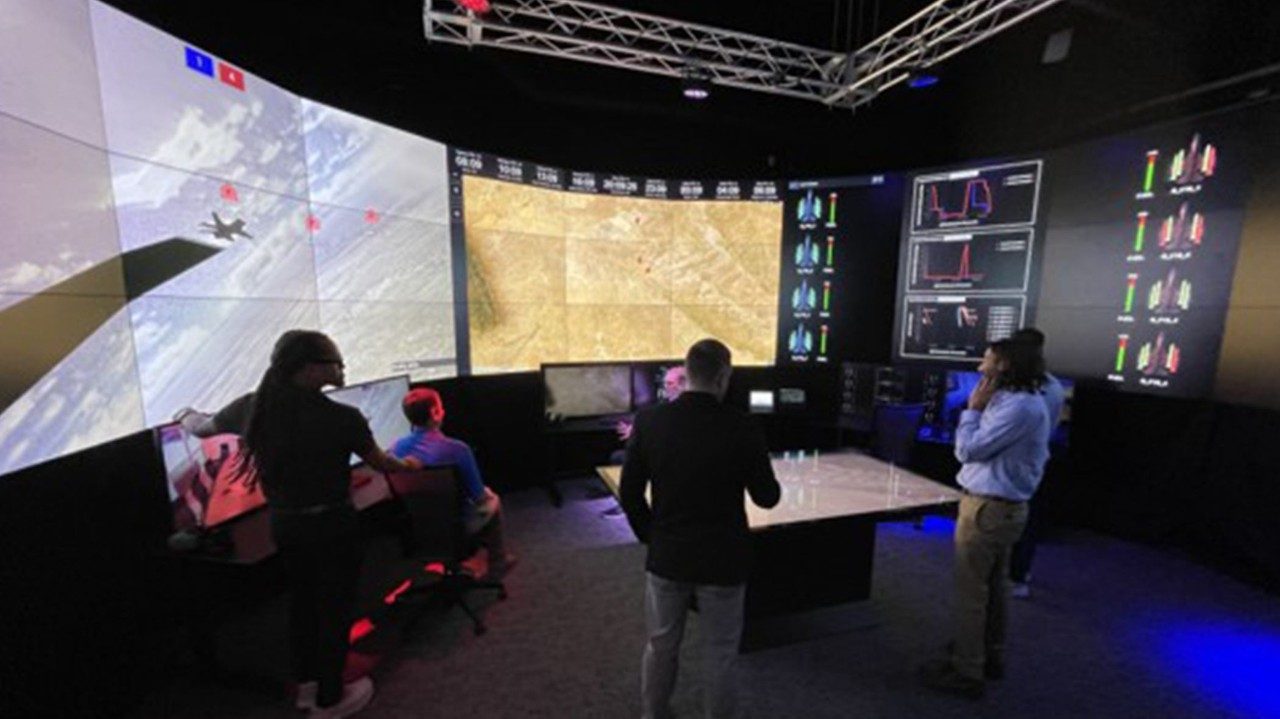
Lockheed Martin builds the most advanced platforms in the world. Until now, connecting software capabilities across those platforms hasn’t had a standard playbook. "What we are building," Stephan says, "is the canonical way for Lockheed Martin to integrate capabilities."
The first product line, featuring a common development kit, simplifies how systems connect, lowering the barrier for developers to integrate capabilities based on their mission need. The second provides user interfaces that make AI capabilities understandable to decision makers. The third tackles interoperability, translating data across platforms and aligning with government standards. And the fourth, streamlines and host trusted data to enable mission-ready decisions. Making the products visible helped stakeholders see, and fund, what they're being asked to believe in.
By the end of the year, all three product lines had delivered transitions across Lockheed Martin.
Doing the Hard Work
For Stephan, the success of the STAR.OS™ solution was proof of something he'd believed for a long time.
"I was never the smartest kid in school," he says. "I got okay grades. But I knew that work ethic makes the difference. Most of my team probably got a better GPA than I did, but being able to communicate ideas, to make something novel land with the people who need to believe in it, that's how I provide value."
Experience has taught him that the edge isn’t always being the smartest in the room. It’s staying in it long enough to find a way.