

Submarines, Satellites and Everything in Between
How one engineer's career has created technology used from the ocean floor to orbit and now, AI for mission operations.


Recently, Dan’s 16-year-old son asked: Dad, do you like having a desk job?
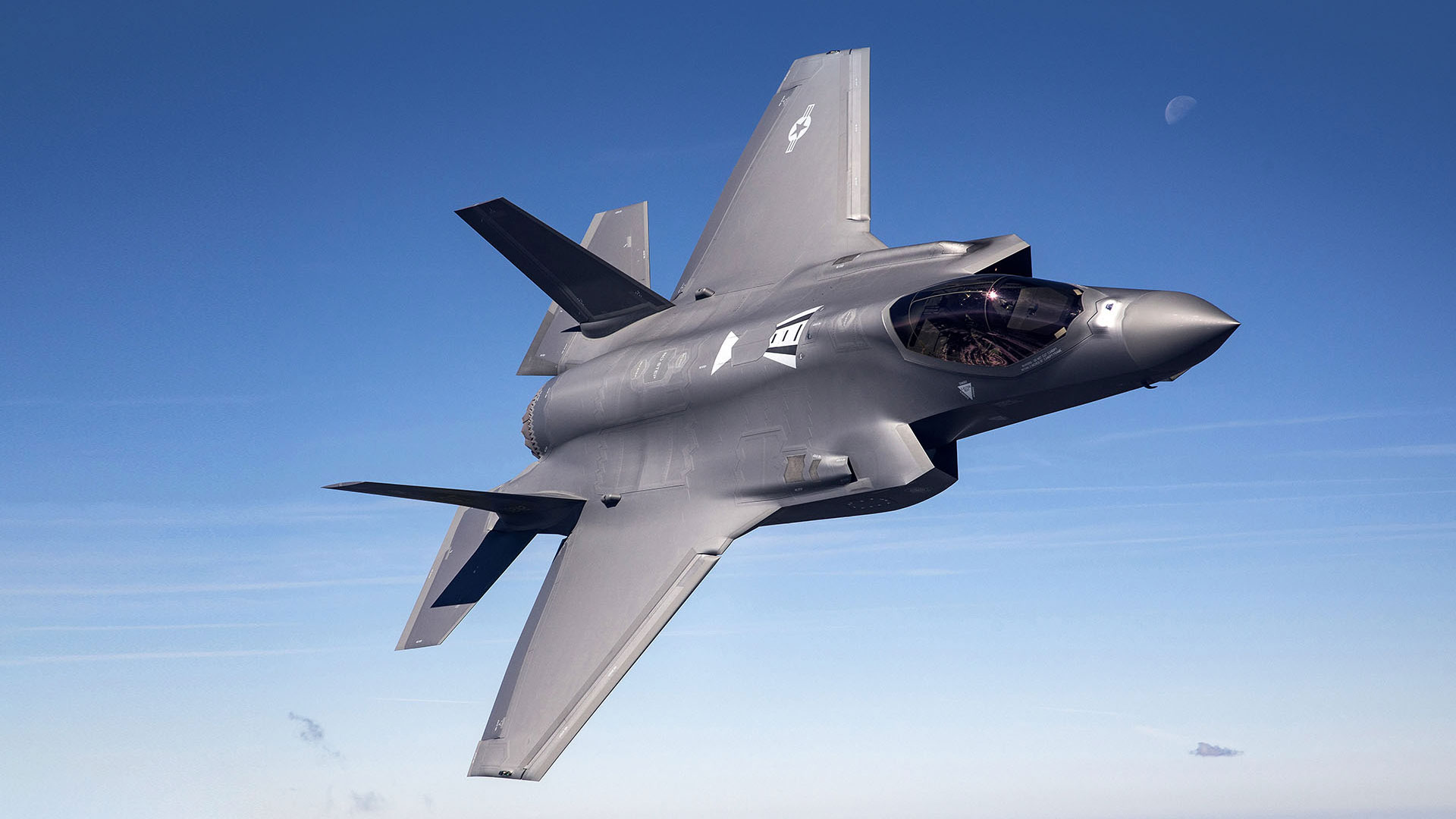
"I said, what you see is me sitting at my desk," Dan says. "What you don't see is that we’re putting AI on an F-35."
The work and oversight that goes into putting AI on an F-35 is rigorous. But that simple explanation helped connect the dots for his son. His son wants to attend a military academy and serve his country, so his eyes open a little wider when Dan shows him the ships, the planes and the satellites he’s designed throughout his career. Dan likes to say he works on the coolest stuff in the world. It’s that theme that has driven his career path, and it’s what led him to the Lockheed Martin AI Center.

Dan, Director of Applied AI Mission Operations, recognizes that wide-eyed look his son gave him. He had it too, watching his own father, a machinist who worked second and third shifts manufacturing sensor components for aircraft. His dad always stressed that Dan should go to college, get his degree and be the person designing the aircraft. That planted the seed and sparked Dan's passion for engineering and career-long drive to work at the forefront of technology and innovation.
A mechanical engineer by training, Dan mapped his path to that goal, and he says it gave him some amazing experiences. "I've had the opportunity to design submarines, GPS satellites, hypersonic vehicles, and now, autonomy and AI," he says, “Undersea to orbit to the algorithms connecting it all.” The constant was focus and rigor, applied to problems that kept getting more complex, until the systems themselves became autonomous. Today, his career path runs through the Lockheed Martin AI Center.
He counts three lessons along the way, each from a mentor, each still in use.
Three Lessons
The first lesson was rigor and a focus on quality. "One of my first colleagues on the GPS-III program taught me how important it is to follow the rigor necessary to deliver high-quality designs," Dan says. "You launch a satellite once. If it fails, you've failed the people who built it and the customer who trusted you with it." That rigor is still paying off. Technology from that program helps power the GPS capabilities people rely on every day.
The second was possibility, and it arrived in a room with a robot. At Lockheed Martin's Advanced Technology Laboratories, engineers do very-early-stage research primarily for the Defense Advanced Research Projects Agency. Dan saw that research firsthand at one of the early DARPA robotics challenges, standing beside Boston Dynamics machines the world would later know for their backflips. Up close, the magic looked like work. "I got to see the robots in person. I got to see how hard it was to program them to perform the way you see them now, doing all the backflips," he says. His director used moments like that to widen a mechanical engineer's sense of the possible. "He opened my eyes to what autonomy was and how impactful it could be."
Those first two lessons came together into a discipline. "We needed to apply the rigor of systems engineering to ensure autonomous systems can be used in the real world," Dan says. That focus on verification and validation of autonomous systems is what led him to the Lockheed Martin AI Center.
The third lesson came from the leader who recruited him there. "He taught me to be bold," Dan says.

The proof is in what he built. Dan started initiatives that became core products in the company's AI portfolio, including Cognitive Modules, Lockheed Martin’s STAR.OS™ solution and the Cogniverse™ environment.
"The vision was to create building blocks to rapidly deploy AI, the frameworks and tools to integrate AI-enabled systems and the synthetic environments to train and test them. That took years. We’re delivering that, and our solutions are used on platforms in flight for our customers now."
What He Tells People
For all he has built, the hardest part of his job might be answering a simple question at a dinner party.
"It's hard with strangers to say what I do. Security restrictions make for some pretty short dinner-party conversations," Dan says. "I'm an engineer. I help design aircraft and submarines. Have you heard of the F-35?"
With his kids, he focuses on impact. "I tell my kids that I'm working on some of the biggest, most exquisite things that change the world and protect us."
One of his efforts took him somewhere unexpected: wildfires. He started a program where AI is the centerpiece for managing wildfire detection, prediction and response. It uses publicly available weather and fire data to predict where a fire will spread and where crews should attack it. It's the kind of work he can talk about openly, and his kids notice. "Seeing their eyes open up when they hear about the things I get to work on, those are the coolest moments," he says.
The eye opening is working. Both of his daughters are leaning toward engineering careers.
Passing It On
Ask Dan what he tells new hires and younger engineers, and he starts in the same place every time: stay curious. Expand your knowledge and keep exploring education and opportunities outside your comfort zone, especially now, when AI is transforming the way we work almost weekly. Some of the highest performing teams are made up of people with diverse backgrounds, personal and professional. Be assertive, and don't be afraid to expand your field of view.
As for where to put that kind of curiosity to work, he doesn't hedge: "There's a lot of hype around AI, a lot of companies with shiny brochures. We're actually delivering operational capability."

Opening Doors for Others
Years ago, a machinist's son set out with a simple ambition. He wanted to work on really cool stuff. He designed submarines and satellites and hypersonic vehicles, and now he helps integrate AI on F-35s, proving that a desk job can change the world.