


The Habit of Asking


How one program manager's curiosity led her from a childhood mystery to Lockheed Martin's AI Fight Club, and toward helping others see what's possible.
In seventh grade, Aura went to a career day presentation she's never forgotten. A presenter shared that while there were many projects he couldn't talk about, there was one he could: he'd helped build the Hubble Space Telescope.
"That experience always stuck with me. It showed me it was possible to work on something bigger than myself, and that my work could one day reach space" Aura says.

Finding Her Way to Lockheed Martin
Years later, while searching for internships as a computer science student at the University of California, Santa Barbara, Aura found one at Lockheed Martin. She applied and was hired.
Her first assignment put her on the Terminal High Altitude Area Defense system, known as THAAD, writing software that helped test the missile defense system. It was the start of a career defined by range: rotations through different programs and an MBA from UCLA Anderson pursued alongside her work.

A Door Opens
It was through that work and collaboration with the CTO’s organization that she met Irene Helley, vice president of applied AI, a mentor who changed the direction of her career.
At the time, Aura was working as the deputy program manager of the Multi-Slit Solar Explorer (MUSE) program, a future NASA mission that the Advanced Technology Center is building. Once MUSE launches, through AI the mission's data can potentially help predict solar flares and coronal mass ejections, events that can disrupt satellites, astronauts and power grids here on Earth.
She and Irene talked about Aura's management and technical experience.
"And I asked if there was any opportunity on her team," Aura says.
Irene opened a door, forwarding Aura's resume to the AI Fight Club™ team, where Aura now serves full time as AI Research Engineer Manager.
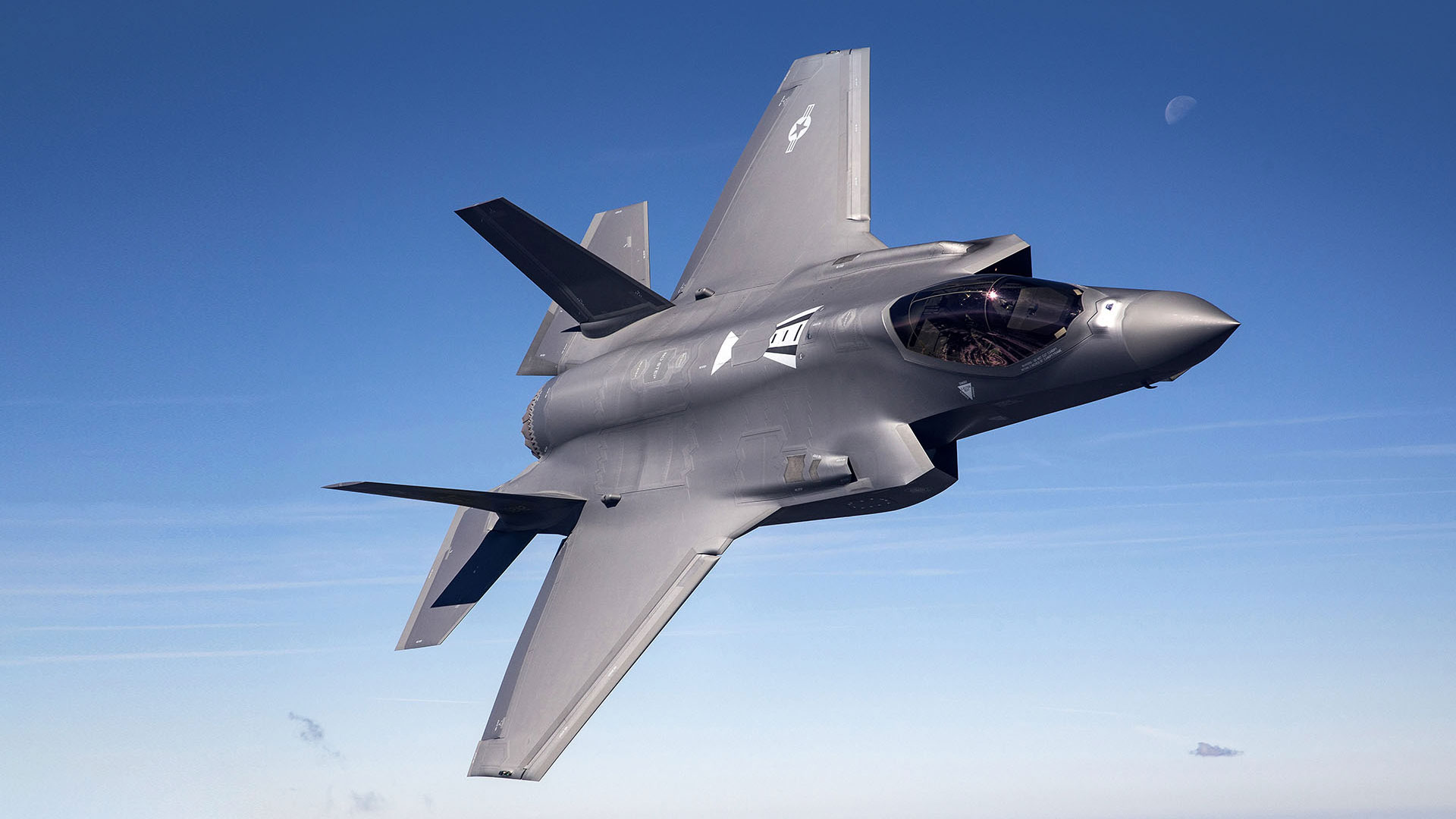
Aura leads a team focused on applied AI mission management, building AI capabilities for specific Lockheed Martin customers, then using simulation technology to train, test and prove those capabilities before they ever reach the field. This year, the team's central focus is the Cogniverse™ environment, a virtual proving ground that powers AI Fight Club.
From Setback to Success
AI Fight Club's first real test came early when a simulation didn’t work the way the team expected.
The team members, who work mostly virtually day to day, got together in person for a series of meetings. Alongside experts, they worked the problem until AI Fight Club's AI agents could simulate real wins and losses in the virtual environment.
"Even if you're the smartest person, you can't do everything by yourself," Aura says. "It takes a team to get something done."
As part of the team, Aura leaned into what she didn't know, staying close to the people who did and figuring it out as she went. It's the same approach that carried her through MUSE without formal background in heliophysics or aerospace engineering, and the one that got AI Fight Club's aircraft to achieve successful virtual flight.

AI Fight Club's simulation environment now runs on that same approach: thousands of scenarios, algorithms tweaked again and again, long before any capability reaches a customer. It's also grown beyond its original focus on Lockheed Martin's Aeronautics business area. The team is now working with Rotary Mission Systems, Missiles and Fire Control, and Space, building versions of AI Fight Club shaped around what each business area needs.
Opening Doors for Others
Aura's comfort with the unfamiliar took root long before her career at Lockheed Martin. She traces it to her years in Girl Scouts, where she first learned to lead, and later to Lockheed Martin's Engineering Leadership Development Program, which rotated her through several roles.
“Because of these experiences, I’m comfortable being uncomfortable in new roles,” Aura says. “Not knowing a new technology or program area has helped me ask the right questions and push myself to learn."
Those experiences are part of why she volunteers today with Girl Scouts and through the MUSE Outreach program, which partners with the Boys and Girls Club of East Palo Alto. During a recent Lockheed Martin tour that she organized for MUSE Outreach High School Interns, she made a point of including a panel of early-career employees that were not only engineers, but also outside of engineering. One panelist, a lawyer, surprised a student who was interested in being a lawyer, and who hadn't realized aerospace companies needed lawyers at all.
"It's hard to be what you cannot see," Aura says.
She hopes young people take away something else, too: that it's normal to feel unsure when doing something new, and that they'll learn by making mistakes and asking for help.
Mentors and leaders have opened doors for Aura. Now, she's helping others see what’s possible for them, too.