


Twenty Years of Polish F-16 Airpower


When Poland’s first F-16 Fighting Falcon lifted off from Lockheed Martin’s Fort Worth, Texas, facility on March 14, 2006, it marked a turning point for the Polish Air Force—one that modernized the nation’s airpower and enabled integration into NATO’s fighter force.
Two decades later, the F-16 stands at the heart of Poland’s air defense. Flown by Polish pilots and supported by Polish ground crews, the F-16 safeguards the nation’s skies while reinforcing security on NATO’s eastern flank, enabled by a decades-long partnership between Poland and Lockheed Martin.
From First Flight to Fleet-Ready Force

Poland’s 2003 decision to acquire 48 F-16 Block 52+ aircraft under the Peace Sky program reshaped the trajectory of its air force. Delivered in partnership with Lockheed Martin, the acquisition introduced advanced multirole capability and aligned the force with NATO training, tactics and operational standards.
Early pilot training with the U.S. Air National Guard’s 162nd Fighter Wing established Poland’s first cadre of F-16 aviators while Krzesiny and Łask air bases were modernized to support allied operations.
By 2010, the aircraft assumed Quick Reaction Alert (QRA) duties defending Polish airspace, and Poland graduated its first domestically trained F-16 pilots. Sustainment capacity also expanded as Wojskowe Zakłady Lotnicze No. 2 (WZL-2) in Bydgoszcz grew to strengthen in-country F-16 maintenance, reinforcing readiness and sovereign support. Polish industry also contributes to the broader F-16 enterprise through PZL Mielec, which manufactures major fuselage structures for the Block 70/72 aircraft and continues to expand its role supporting the global F-16 program.
Since then, Polish F-16s have supported multinational exercises and NATO missions. Most recently, four Polish F-16s deployed to Lithuania to assume NATO’s Air Policing mission, underscoring Poland’s sustained role in safeguarding Allied airspace. Backed by Lockheed Martin’s advanced deterrence and security capabilities, the F-16 continues to reinforce credible airpower along NATO’s eastern flank.
Modernizing for the Future

Today, the F-16 Jastrząb (“Hawk”) continues to play a front-line role in Poland’s air operations, supporting QRA, Baltic Air Policing, intelligence, surveillance, reconnaissance and NATO training missions.
In 2025, the Polish Ministry of National Defence finalized a Letter of Offer and Acceptance (LOA) with the U.S. government to modernize its fleet of F-16 Block 52+ aircraft to the F-16 Viper configuration, also known as the F-16V.
“Poland’s decision two decades ago to field the F-16 reshaped its airpower and strengthened NATO’s collective defense,” said Mike Shoemaker, vice president and general manager of the Integrated Fighter Group at Lockheed Martin. “With the F-16 Viper upgrade, Poland is fielding new advanced capabilities grounded in real-world operations, integrated across NATO and scaled to deliver credible deterrence in increasingly complex and contested environments.”
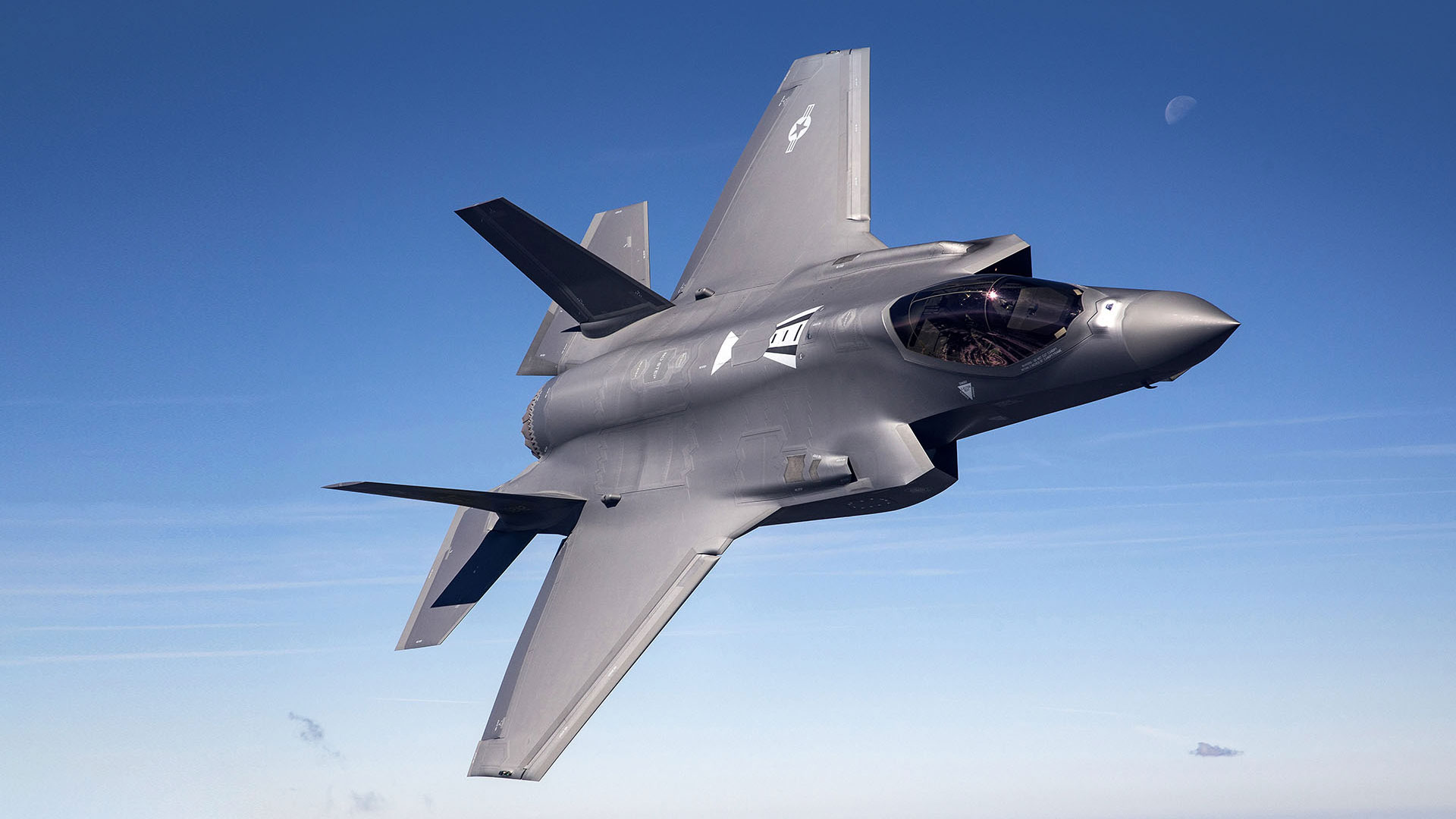
The F-16V configuration provides Poland with a cost-effective path to next generation capability while maximizing the value of its existing fleet. Advanced sensing, computing and cockpit upgrades enhance pilot awareness and mission effectiveness. As Poland prepares to field the F-35, the F-16 remains central to a layered, interoperable force that strengthens national defense and collective security.
Securing Peace Through Strength
A Pilot’s Reflection: Strengthening Alliances Cockpit by Cockpit
Shortly after earning my instructor pilot (IP) certification, I came across an email where the Polish Air Force (PLAF) was looking for American instructor pilots to spend the summer training their F-16 fighter pilots.
My first reaction was excitement, followed by slight apprehension.
The shift from being a competent tactician to becoming a teacher of tacticians is massive. As a fighter pilot, you focus on your own performance and the decisions that shape a mission’s outcome. As an instructor, you’re responsible for shaping how someone else thinks, decides and ultimately operates in the air. Once you’re on the other side of the cockpit the reality is humbling. You realize you still have to ‘cut your teeth’ as an instructor before you feel confident to teach.
The prospect of swapping tactics with an allied air force was compelling. But beneath the excitement lingered a question: Can I do this?
Six months later, I arrived in Poland.
Arriving into a foreign country is inherently disorienting, especially when you’re stepping into a new squadron where no one knows you and senior pilots quietly assess your judgment and credibility. Rightfully so—the role carries real consequences for mistakes.
The unfamiliar quickly became familiar.
The Polish pilots shared the same sense of humor as my own squadron and their tactical doctrine resonated with what I had been taught. Most striking was their fierce professionalism. Mission planning was meticulous, debriefs were candid and rigorous, yet, they remained humble and hungry for knowledge, while eager for feedback. Every Polish F-16 pilot carried the weight of what their nation expected of them—and they treated that responsibility with honor and reverence.
I learned two crucial lessons.
First, the cockpit is a diplomatic arena. As an American IP, each lesson, correction, and encouragement carried subtle weight. I wasn’t just shaping a pilot; I was reinforcing a partnership between two Air Forces. When you become an instructor, you understand what you teach will not just impact a student’s single flight. The habits, instincts and thought processes will carry throughout their career. That reality demanded that I bring my A-game to every game.
Second, alliances are built cockpit by cockpit. One instructor teaching one pilot may seem small, but the lessons and experiences carry forward. Years later, many of the officers I trained are now instructors and squadron leaders themselves. The standards we discussed, the trust we built and the responsibility we shared continue to ripple forward in how they train, lead and defend their country.
At the time, I felt honored to serve in the role. Today, I feel proud to have played a small part in supporting the PLAF. I was invited inside their operations, trusted quickly and challenged daily. There’s something powerful about solving hard problems side by side, it forges trust quickly. In those moments, we weren’t separate forces; we were one team, focused on performing when it mattered most.
Photos courtesy Michelle Curran.